Facing a DUI charge in Hudson County, whether it happened in Jersey City, Hoboken, or along the New Jersey Turnpike, can be incredibly stressful. A conviction here could cost you your license and impact your daily life across North Jersey. Can you beat the charges? Does the state have enough evidence to prove their case against you? How can you defend yourself?
You don’t have to accept a DUI charge without a fight. You have legal options.
At this point, it’s important to talk to a skilled New Jersey DUI lawyer about your case. At The Kugel Law Firm, our lawyers can analyze the evidence against you and craft a strategic defense tailored to your unique circumstances. We can work tirelessly to challenge the prosecutors’ evidence, closely examine law enforcement procedures, and advocate for your rights at every step of the legal process. Our attorneys can help you learn how plea bargains work in DUI cases and explain how you could get your case dismissed depending on the circumstances. Contact us today at (973) 854-0098 for a consultation and let us help you build a strong defense against DUI charges in New Jersey.
What is Reasonable Doubt?
In New Jersey DUI, a prosecutor must prove beyond a reasonable doubt that you operated a motor vehicle while under the influence of alcohol or drugs.
“Beyond a reasonable doubt” is a common legal term known as a standard of proof. In order to convict you of a DUI, a judge must be convinced with no reasonable doubt left about the truth.
This is a high standard of proof – much higher than “preponderance of the evidence,” which only requires a judge to be more than 50% sure that the facts more likely happened than not. A higher standard of proof makes it harder for the prosecutor to prove their case against you.
While DUI offenses in New Jersey are treated as traffic violations, they still carry serious consequences that can impact driving privileges and result in significant financial costs.

“Operating” a Motor Vehicle
To prove that you’re guilty of a DUI, the state must first prove that you were “operating” a motor vehicle. This may seem like an obvious question at first – it makes sense to assume that you’re operating a car if you’re in the driver’s seat while it’s moving.
But what if you’re in the driver’s seat and the car is parked? What if the engine is on but you’re not moving? Do you still qualify as “operating” the vehicle then?
In New Jersey, “operating” a vehicle is broader than actually moving the car. Courts have found operation where a person is in the driver’s seat, turns the ignition, starts or maintains the engine, and shows intent to move the vehicle. Merely standing outside the car is not enough. Because the “operation” question is fact-specific, a skilled New Jersey DUI defense lawyer should analyze whether the facts support or undermine the operation in your case.
Where the Offense Occurred Matters
In New Jersey, the location of a DWI offense plays a key role in determining whether prosecutors can move forward with a case. The law doesn’t apply everywhere; it focuses on places that are open to the public or accessible to traffic. This includes public roads, highways, and parking lots where vehicles regularly come and go.
If the alleged offense happens on private property, the situation becomes more complicated. For example, being found behind the wheel in your Jersey City apartment driveway or parked in a land not open to the public might not meet the statute’s location requirement. That distinction gives defense attorneys room to question whether the charge fits the facts.
Prosecutors must clearly show that the driver was operating a vehicle in a location covered under the law. Without that proof, the case may weaken or even fall apart. This is why the exact spot of the alleged offense often becomes a central issue during court proceedings.
Understanding how location affects a DWI case helps drivers see the full picture of what they’re facing. It’s not just about whether someone was driving under the influence; it’s also about where that driving took place. This important detail can make a major difference in how a case unfolds and what defenses might be available.
New Jersey DUI Lawyer

Evidence Needed for DUI Conviction
In New Jersey, individuals facing allegations of driving under the influence (DUI) have access to several potential defenses. However, the prosecutors can utilize various forms of evidence to potentially establish your guilt. Below are the seven types of evidence that prosecutors can use to support DUI charges in New Jersey:
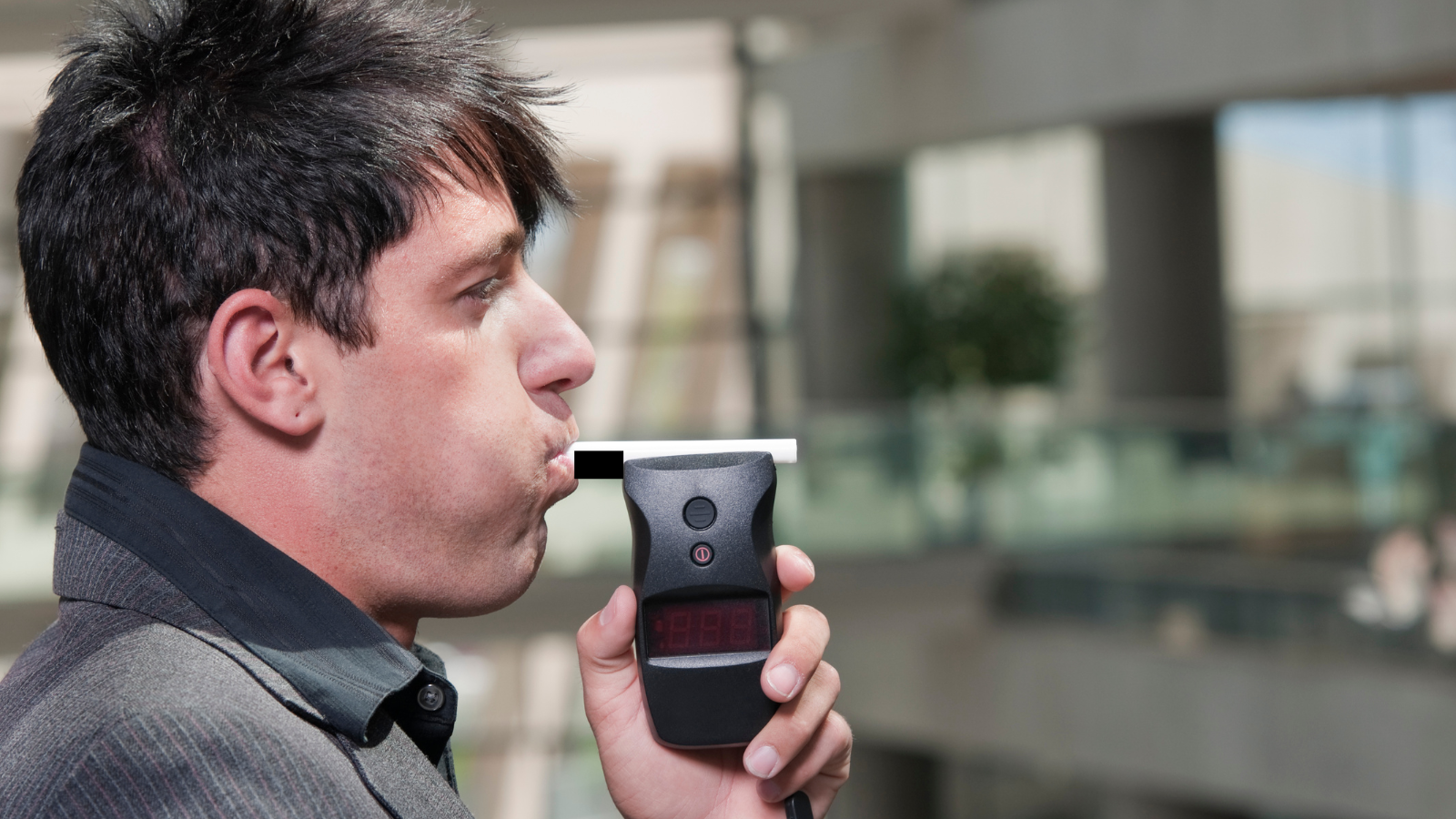
- Breath Sample: If you were subjected to a breathalyzer test during or after your traffic stop, the breath sample you provided could play a crucial role as evidence in your DUI case. However, there are various approaches to challenge the results of the breath test, and it is recommended to seek guidance from your attorney on potential methods to possibly exclude these results from being presented in court.
- Standardized Field Sobriety Test (SFST) Results: If you participated in Standardized Field Sobriety Tests (SFSTs) during your traffic stop, the arresting officer’s interpretation of your performance in these tests can also serve as evidence in your DUI case. Yet, you may be able to challenge the credibility of the arresting officer’s interpretation by demonstrating improper test administration or presenting an alternative explanation for your performance.
- The Arresting Officer’s Observations: During your DUI trial, the prosecution has the authority to call the arresting officer as a witness to testify regarding physical signs of intoxication, such as slurred speech, bloodshot eyes, the smell of alcohol, or unsteady movement. However, these observations can be subjective, and factors like fatigue, allergies, or anxiety can mimic intoxication symptoms.
- Your Statements to the Arresting Officer: The prosecutor can use any statements you provided to the arresting officer, with the arresting officer testifying about what you said on the roadside. However, if you were not properly read your Miranda rights after being placed in custody, certain statements may be inadmissible in court.
- Physical Evidence from Your Vehicle: If the arresting officer discovered an open container in your vehicle, the prosecutor might present this as indirect evidence of drinking while driving, assuming that the vehicle search was lawful.
- Police Dash Camera or Body Camera Footage: Besides the arresting officer’s testimony about their observations, if there is video footage capturing your driving or actions during the traffic stop, the prosecutor may present this footage as evidence in your DUI case.
- Eyewitness Testimony: If there were any witnesses to your driving behavior or the traffic stop, which could include passengers in your vehicle, the prosecutor may summon these individuals to provide sworn testimony. However, witness statements are often subject to reliability challenges, and various tactics can be employed to mitigate the impact of witness testimony in court.
If you’re facing a DUI charge in New Jersey, understanding the evidence needed for a conviction is essential to building a strong defense. At The Kugel Law Firm, our skilled New Jersey DUI lawyer can meticulously assess your case, ensuring that all essential evidence, such as breathalyzer results, field sobriety tests, and police procedures, is examined with precision. Contact us today to protect your rights and secure the best possible outcome for your situation.
| Type of Evidence | What It Means / How It’s Used | Key Considerations / Possible Defenses |
|---|---|---|
| Breath Sample | A breathalyzer test can show blood alcohol levels and be strong evidence of intoxication. | May be challenged due to calibration issues, operator error, or improper procedure. |
| Standardized Field Sobriety Test (SFST) Results | Tests like walk-and-turn or eye tracking used to assess coordination and impairment. | Subjective results can be disputed based on improper administration or health conditions. |
| The Arresting Officer’s Observations | Officer may describe behavior like slurred speech, red eyes, or unsteady movement. | Symptoms may have other causes such as fatigue, allergies, or anxiety. |
| Your Statements to the Arresting Officer | Statements made during or after the stop can be used as evidence. | May be inadmissible if Miranda rights weren’t read or statements were coerced. |
| Physical Evidence from Your Vehicle | Items like open alcohol containers may be used to suggest drinking while driving. | Must prove legal search; a container alone doesn’t prove active impairment. |
| Police Dash Camera or Body Camera Footage | Video may show your driving, behavior during the stop, and officer interaction. | Footage may support or contradict testimony; unclear video can be challenged. |
| Eyewitness Testimony | Other individuals may testify about your driving or actions during the stop. | Witness reliability can be questioned due to bias, poor visibility, or memory. |
Proving Impairment Under the Influence
The second part of proving a DUI involves showing that the driver was under the influence of alcohol or drugs. This process is more straightforward with alcohol than with other drugs.
New Jersey uses breath test results taken during or after your traffic stop to prove that you were under the influence of alcohol. In New Jersey, the legal blood alcohol content (BAC) limit is 0.08%. You may face increasingly severe penalties if your BAC is especially high – for example, over 0.15% in NJ.
But a breathalyzer cannot detect drugs other than alcohol. Blood tests for marijuana or cannabis aren’t accurate because THC can be detected in the body weeks or months after use. And there’s no way to field test other types of prescription medication or illegal drugs.
A prosecutor trying to prove drug intoxication may also use the following as evidence:
- A failed Field Sobriety Test (FST), which can be challenged on the grounds that the test wasn’t administered properly or your “failure” was because of something else
- The arresting officer’s observations, testimony, and report notes
- Any statements you made to the arresting officer, which you could argue are inadmissible in court based on evidence rules
- Physical evidence from your vehicle, such as open containers or traces of drugs
- Police dashcam or bodycam footage of your traffic stop interactions
- Other eyewitness testimony from third parties who happened to see you driving the vehicle, such as passengers or pedestrians
Not all evidence is ironclad. The evidence against you may feel overwhelming, but an experienced DUI lawyer can help enforce your legal rights. You shouldn’t face the heavy hand of the law alone without a diligent advocate by your side.
How Prosecutors Use Chemical Test Results in DUI Cases
Prosecutors in New Jersey use chemical test results to establish a defendant’s blood alcohol concentration (BAC) as evidence of intoxication. One commonly used device, the Alcotest 9510, has a known margin of error of ±0.01% BAC. This potential variation means a reported reading of 0.09% could theoretically be a fraction higher or lower, leading defense lawyers to question the accuracy under borderline circumstances.
Before breath test results are admissible in court, prosecutors must establish that all legal requirements were met. This includes proving the 20-minute observation period was properly followed to eliminate potential contamination of the breath sample. Prosecutors also introduce certified calibration logs to show the machine was properly maintained. If defense attorneys claim radio frequency interference (RFI) affected the results, prosecutors may present evidence that the Alcotest 9510 has built-in protections against such interference.
In court, prosecutors use expert testimony and breath test records to demonstrate that the BAC reading accurately reflects the driver’s level of intoxication at the time of arrest. Certified breath test operators testify that the test was conducted under proper conditions, reinforcing the prosecution’s argument.
While DUI defense attorneys may challenge chemical test results, prosecutors use these tests as strong evidence to argue that the defendant was operating a vehicle under the influence of alcohol. Successfully meeting legal standards for test admissibility bolsters the prosecution’s case, often leading to convictions or plea agreements.
Can You Be Charged With DUI Without Evidence?
In New Jersey, an individual may face a DUI charge, but it does not necessarily lead to a conviction if there is insufficient evidence. The prosecutor must meet a high standard of proof beyond a reasonable doubt, which is challenging to achieve. To prove that the person was “operating” a motor vehicle, the state must demonstrate that they had control of the vehicle, such as being behind the wheel with the keys in the ignition or standing outside the car on the side of the highway. However, the determination of “operation” is fact-specific, and it is crucial to discuss the case’s specifics with a skilled DUI defense attorney.
Proving impairment involves demonstrating that the driver was under the influence of alcohol or drugs. While breath tests are typically used for alcohol, drug intoxication can be more challenging and may require various forms of evidence, such as Field Sobriety Test results, officer observations, statements, physical evidence from the vehicle, and eyewitness testimony.
Regardless of the presented evidence, a competent DUI attorney can assist in protecting the defendant’s legal rights and questioning the evidence’s validity. It is crucial to consult with an attorney promptly to develop a robust defense strategy and discuss the specifics of the case.
How to Fight a DUI Charge
The best way to defend yourself against a DUI charge is to have an attorney review your case as soon as possible. DWI cases are prioritized. New Jersey’s judiciary has set a 60-day resolution goal, and courts have noted 90 to 120 days as a common timeframe, though schedules vary, and delay alone doesn’t require dismissal.
In defending yourself, your attorney may use several different strategies:
- Challenging chemical test results for being administered or handled improperly
- Countering the officer’s testimony with another valid explanation for your behavior
- Introducing witnesses who will testify that they saw things differently
- Challenging the validity of the traffic stop on probable cause grounds
- Bringing up other legal missteps such as failing to read you your Miranda rights
A DUI conviction could mean losing your driver’s license, owing thousands of dollars in penalties and fines, or even facing criminal charges. It’s important that you take your next steps forward with confidence in your defense. The attorneys at The Kugel Law Firm can help. Schedule a no-risk case consultation with our leading New Jersey DUI attorneys now. Whether your DUI charge originated in Jersey City, Bayonne, or anywhere in Hudson County, our New Jersey office is ready to help. Call us today at (973) 854-0098.